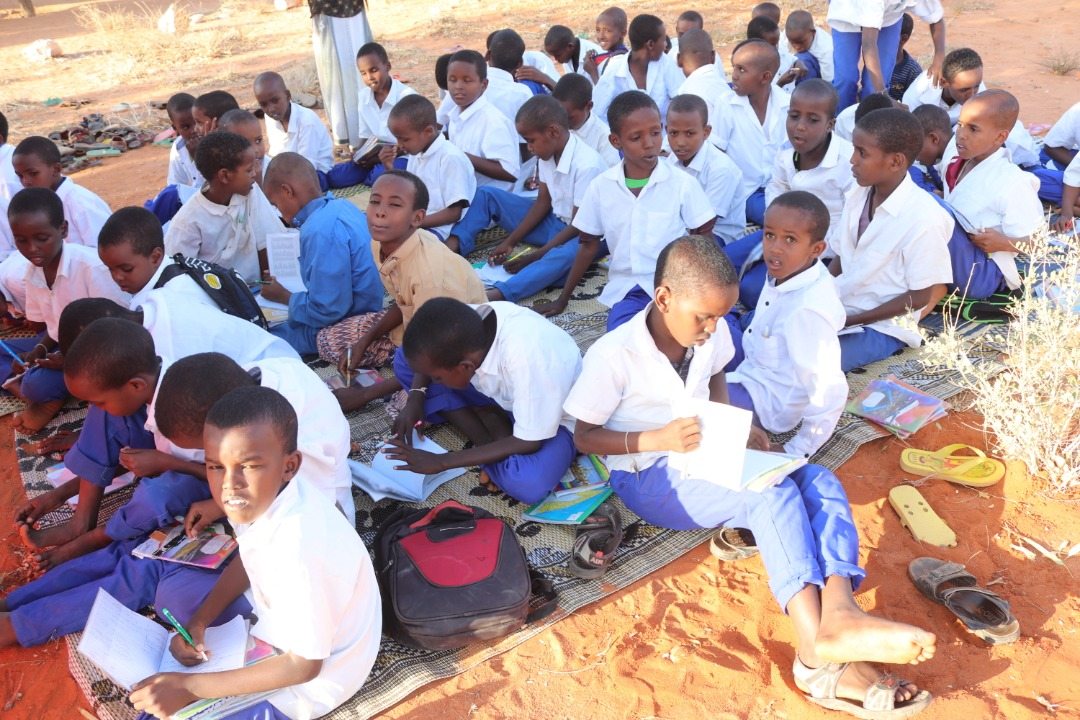
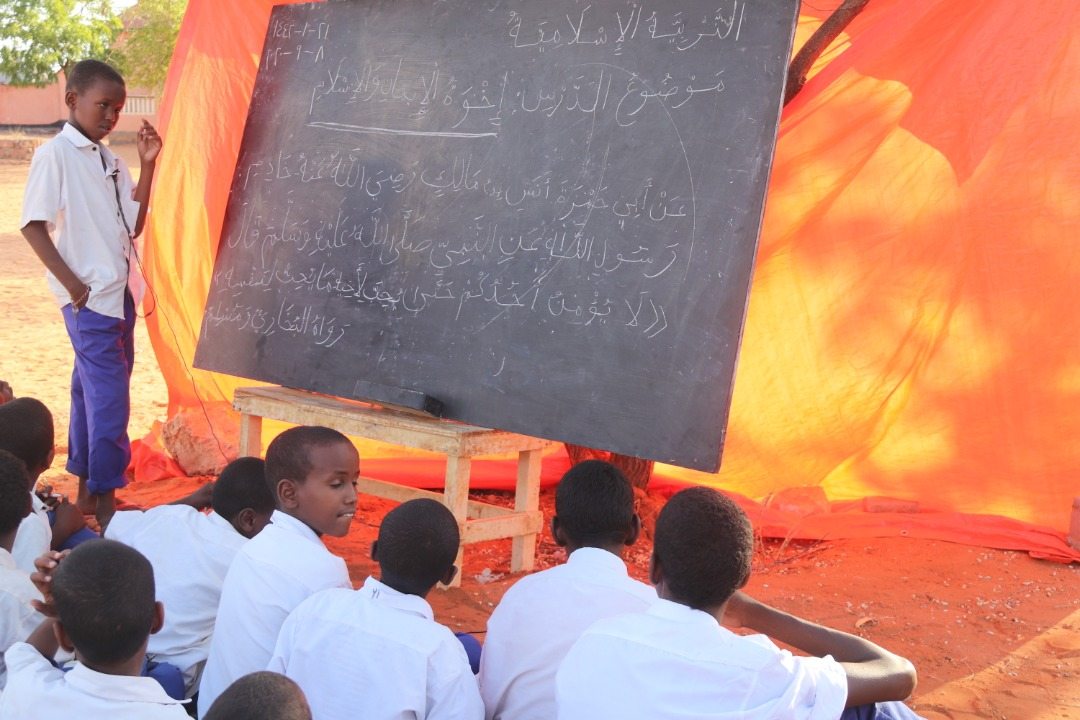
More than three million school-age children in Somalia are out of school today — one of the highest rates anywhere in the world, according to UNICEF. In the areas hardest hit by drought and displacement, fewer than one in three children ever enroll in primary school, and girls face the steepest barriers of all. Every child kept out of a classroom is also kept out of the literacy, skills, and opportunity that let a household — and eventually a whole community — work its way out of poverty. Our programs support orphaned and vulnerable children directly, and invest in the schools and teachers around them, so access to education becomes durable rather than incidental.
Our Strategy
Decades of conflict and recurring drought have left Somalia’s education system underfunded and unevenly distributed, with rural, pastoralist, and displaced communities furthest from a working classroom. Many children who do make it to school arrive hungry, without materials, or into a class led by a teacher who has never received formal training.
Our strategy pairs direct support to children who would otherwise drop out — sponsorship, feeding, learning materials — with investment in the institutions around them: buildings, trained teachers, equipment. That combination means a donor’s contribution compounds: a trained teacher and a working classroom serve every cohort that follows, not just the child enrolled today. We align our support with national curriculum standards and coordinate with local education authorities, so it strengthens the public system rather than running parallel to it — the model most donors recognize as sustainable education programming in fragile and low-resource settings.
Areas of Focus
Orphan Sponsorship & Educational Support
A one-to-one sponsorship model covering tuition, uniforms, school fees, and learning materials for orphaned and vulnerable children, paired with psychosocial support — so a child arriving from loss or displacement has the stability to stay enrolled, not just the paperwork to enroll.
School Construction & Rehabilitation
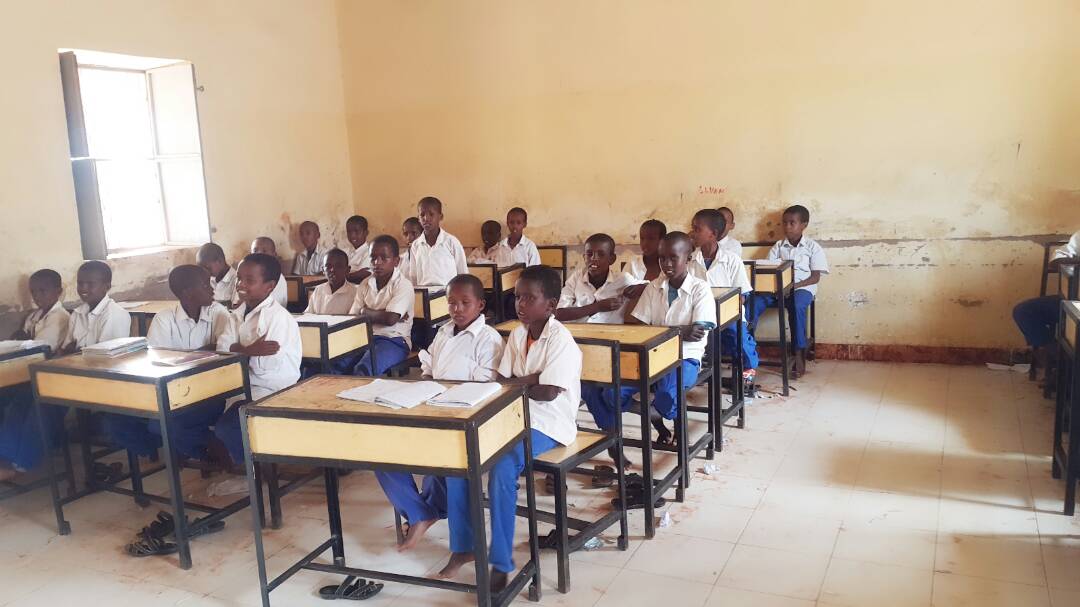
Rebuilding classrooms damaged by conflict, flooding, or years of neglect, fencing compounds for safety, and providing durable furniture — a one-time capital investment that keeps serving new students for years after the program itself ends.
Laboratory & Library Development
Equipping schools with science and ICT labs, library setup, and reading materials, so schools can actually teach the curriculum they are assessed on — not just house it on paper.
School Feeding Programs
Daily meals served at school, which sector evidence consistently links to attendance and retention — hunger is one of the most common reasons a child in a food-insecure household is pulled from class to work or beg instead.
Teacher Training & Capacity Building
Training in pedagogy, classroom management, safeguarding, and curriculum delivery for teachers who often enter the classroom with little formal preparation — an investment that multiplies across every class a teacher goes on to teach.
Provision of School Equipment & Learning Materials
Textbooks, desks, whiteboards, and stationery that close the basic supply gap keeping otherwise-functioning schools from running full lessons for every enrolled student.
School Transportation Support
Transport for learners in rural and pastoralist areas, where distance itself is a barrier — children drop out simply because the walk to the nearest school is too far or unsafe.
Non-Formal & Adult Education
Literacy, numeracy, and accelerated learning tracks for the generation that lost years of schooling to conflict or displacement — a second route back into education and the workforce.
Inclusive Education Support
Materials, teacher training, and physical access adaptations for children with disabilities and other excluded learners, so the school system does not compound a disadvantage a child already carries.